Fwd: Warren Mosler to Robin Brooks on Japan's Fiscal Situation
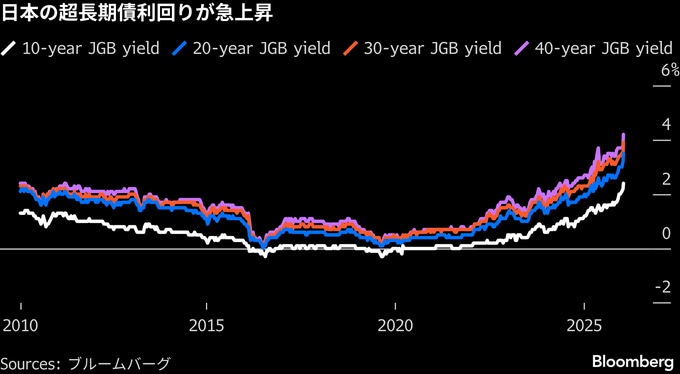
Early this morning, I took a break from working on my book to trade text messages with Warren Mosler, the canonical "father" of MMT. I had been asking for Warren's thoughts on Japan. In particular, I wanted to know what he would say to Robin Brooks, a macro analyst who has been arguing that Japan's rapidly depreciating currency along with sharply higher interest rates on Japanese government bonds (JGBs) tells us that Japan is getting close to a "full-blown debt crisis."
Since we were corresponding by text, Warren's thoughts were brief and incomplete. So, just for fun, I decided to prompt ChatGPT. I asked it to draft a respond to Brooks from the perspective of Warren Mosler.
I could tell right away that it included various statements that Warren would never make. In a few places, ChatGPT got things exactly backwards. I sent it over to Warren, and he responded, "Lots of errors on my position. Should I edit/correct?"
With his permission, I'm sharing the edited text. I removed the passages that Warren cut and indicated in bold the new content he added. I guess you could say ChatGPT got it about half right (or half wrong). Anyway, thanks to Warren and I hope this is useful to those of you following the ever-intensifying commentary about a global debt crisis.
From Warren Mosler's perspective, Robin Brooks's diagnosis of Japan rests on a fundamental misunderstanding of how interest rates, currency values, and government debt interact in a monetary system where the state is the issuer of its own currency.
Start with the core error: Brooks treats higher interest rates as a necessary defense of the currency and as a signal of fiscal stress. Mosler has long argued that this logic has the causality exactly backwards. For a currency issuer like Japan, raising policy rates does not 'tighten' in the conventional sense. It increases government interest payments to the private sector. Those payments are an addition to deficit spending, new yen income, credited to bank accounts, which expands net financial assets. Through this interest-income channel, rate hikes are more plausibly inflationary than disinflationary, especially in an economy already operating at or near full capacity.
In Japan's case, higher rates raise the yen income of JGB holders, boosting domestic spending power. That additional yen spending can weaken the exchange rate, not strengthen it. Brooks interprets yen depreciation alongside rising long-term yields as evidence of a debt crisis. Mosler would respond that Japan cannot be forced into insolvency in yen. The Bank of Japan can always settle any yen-denominated obligation by crediting reserve accounts. Rising term yields simply reflect market anticipation of a future policy choice to pay more interest, along with possible investor preference for duration issues, and not a market verdict that Japan is "running out of money." Furthermore, Japan always has the option to issue only 3-month bills, and not to issue any longer term securities.
Brooks also frames the situation as a trap: raise rates to defend the yen and worsen debt dynamics or keep rates low and suffer currency collapse. From Mosler's view, this trap is imaginary. Brooks has it backwards. The yen, with its floating exchange rate policy, is not defended via higher rates, as it would be with a fixed exchange rate policy. Instead, it is depreciated by higher rates.
Additionally, Japan's imports are overwhelmingly real goods priced in global markets, and its export competitiveness improves with a weaker currency. Without BOJ intervention, foreign exchange reserves remain constant while the level of the yen expresses indifference levels associated with optimal real terms of trade. Those reserves are the by-product of BOJ intervention not evidence of financial fragility.
Crucially, higher long-term JGB yields do not "burden" Japan in any operational sense. They represent higher interest income paid to the non-government sector—mostly domestic institutions. What Brooks calls a debt crisis is, in Mosler's framework, a distributional issue at most, not a funding problem. There is no numerical real constraint is that can be imposed by bond vigilantes or currency traders. If inflation becomes excessive, rate hikes only make it worse. The appropriate tools vary with the underlying reasons for the increase in the price level. In the case of excess demand, for example, which is very rare, fiscal adjustments may be appropriate, which can include interest rate reductions. Prices can also be the result of regulatory measures and instances of imperfect competition, domestic or foreign, often in the context of public and private indexation, none of which are related to interest rate policy.
In short, Brooks mistakes symptoms for causes. Japan is not trapped by its debt; it is choosing an interest-rate policy that weakens the yen and adds income. The problem is not that Japan cannot afford higher rates, but that raising them does exactly the opposite of what orthodox theory predicts.
You're currently a free subscriber to The Lens. For the full experience, upgrade your subscription.